
What is Community Based Public Safety?
“Community-based public safety” (CBPS) is the term used by local practitioners to describe the community-led safety work happening in neighborhoods across the nation. It is a relationship-based violence prevention and intervention approach in which residents are employed and trained as credible, trusted public safety professionals who create safety in their own neighborhoods. CBPS professionals most notably (a) mediate conflicts to a peaceful resolution; and (b) guide those engaged in violence to different choices and healthier outcomes through high-risk interventions, assertive outreach, mentoring, case management, victim services and more. CBPS practitioners also often respond to low level crimes, provide Safe Passage to schools, stabilize families and organize the community around a culture of peace.
Examples of CBPS approaches include:
-
Community Violence Intervention:
A relationship-based violence prevention and intervention model in which residents are employed and trained as credible, trusted public safety professionals who create safety in their own neighborhoods. -
Street Outreach:
Connecting 1-1 with individuals at risk of violence and providing support services, including trauma recovery, supportive housing, facilitated relocation, to name a few. -
Group Violence Intervention
Working with groups at risk of violence to de-escalate conflicts and prevent further retaliatory violence.
-
Crime Prevention through Environmental Design:
Modifying the built environment to reduce opportunities for crime. -
Hospital-Based Violence Intervention Programs:
Engaging with victims of violence in hospitals to provide immediate direct services to prevent retaliation and provide support. -
Safe Passage Programs:
Providing safe routes to and from schools to reduce student exposure to violence and violence which often can begin before or after school.
Do Community Based Public Safety organizations work with law enforcement?
CBPS work operates in parallel to law enforcement. However, in contrast to the system of policing, arrest, and incarceration CBPS creates safety without the collateral damage of incarceration. CBPS reduces city and state budget costs. And, CBPS improves relations between communities and police by engaging residents as participants and leaders in the public safety process. As a result, CBPS reduces violence and incarceration by keeping people from engaging in the cycle of violence that often leads to incarceration. In short, CBPS is a key missing link to building out a new approach to safety. There are roughly two hundred CBPS organizations across the country. The majority have emerged through organic neighborhood leadership to save young people’s lives from gun violence and incarceration. They hire people from the neighborhood – often people that previously have been engaged in violence or been incarcerated, people that bring immense credibility to changing outcomes for the target population.
Violence Intervention Terms and Definitions
-
Community Navigator:
Practitioner trained in multiple disciplines who works in coordination with human services, public health professionals, and public safety providers. (AKA Social Worker) -
Community Health Worker:
Specially trained interventionist who responds to violence prone individuals in a hospital setting. Connects individuals with services and mentoring needed to prevent additional violence. -
License to Operate:
Community leaders with the relationships, connection and access that enables them to intervene in violence in real-time and prevent retaliatory violence, often referred to as LTOs. This person may be a freelance contractor, not formally connected to any organization but available to assist in a moment's notice. CBPS organizations typically have relationships with numerous LTOs.
-
Violence Interrupter:
Professionally trained individual who responds to or intervenes in social group/gang crisis and aftermath. Possesses the capability to mediate conflicts, prevent retaliatory shootings and handle rumor control. (AKA Community Interventionist. -
High-risk Interventionist:
Highly trained and certified interventionist who provides high level crisis response, including in real-time when necessary, to a variety of situations causing trauma in a community. -
Outreach Worker:
Provides education and awareness about local services and opportunities to their service area. Connects to hard-to-reach members of the community and provides services outside the normal outreach to people in the community. Identifies local community needs and creates linkages to short-term stabilization, in addition to providing referrals for other services needed.
Who can join the Community Based Public Safety Association?
CBPS prioritizes building strong relationships between residents, community organizations, and health and public safety professionals.
CBPS Association members are Community Violence Interventionists, High Risk Interventionists, Assertive Outreach Workers, Credible Messengers, Victim/Survivor Advocates, Community Health Workers, Community Outreach Workers, Navigators, and Case Managers – and comprise one of the largest movements in the country led primarily by Black and Brown men.
Does this Really Work?
Absolutely. The impact of our collective work in more than 200 cities across the country has produced evidence-based results, reducing violence and crime, saving lives, increasing safety and well-being, improving community police relations and saving billions of dollars nationwide. Policymakers and funders are pointing to the tremendous results of CBPS in cities like Los Angeles, Detroit and Newark as they seek to expand and replicate CBPS programming nationwide.
Read more:
Inside Philanthropy: Towards Greater Community Safety:
The Case for Community-Based Violence Intervention
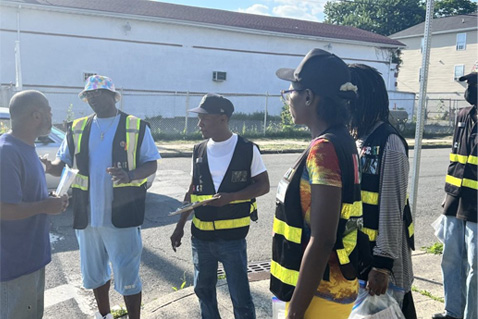
Using the Newark Community Street Team (NCST) as an example, from 2014 – 2024, Newark saw a more than 50% reduction in homicides with the city now experiencing 60-year lows.
The evidence is clear: CVI works. Cities that have invested in effective, comprehensive, community violence intervention and prevention strategies have seen decreases in gun violence and recidivism rates. Even outreach workers themselves benefit from new employment opportunities bolstering meaningful community workforce development.

After one year of Detroit Community Violence Initiative: All 6 CVI Zones record historic reductions in violent crime of 37%-83% in last quarter
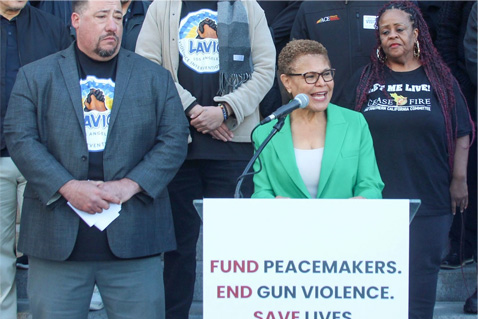
Recent data from the Los Angeles Police Department shows:
A 45% decrease in gang-related homicides in Gang Reduction Youth Development zones compared to 2023 and a 56% decrease in gang-related homicides compared to 2022.
A 48% drop in the number of victims shot in gang-related conflicts
Benefits of Community-Based Public Safety
There are many benefits to community-based public safety, including reducing violent crime and gun violence. Below are a few highlights:
Reduced Crime and Violence:
Community-based approaches, like violence intervention programs and street outreach, have shown success in reducing gun violence and other crimes.
Empowerment and Participation:
Community-led initiatives empower residents to take ownership of their safety and build stronger, safer neighborhoods.
Improved Community Trust:
Engaging residents in public safety efforts builds trust between communities and law enforcement, leading to better cooperation, understanding, and information sharing.
Focus on Prevention:
Community-based public safety emphasizes prevention, rather than simply reacting to crime, by addressing the root causes and providing resources and opportunities for at-risk individuals.
Addressing Root Causes:
Community-based strategies focus on addressing the underlying factors that contribute to crime and violence, such as retaliation, poverty, unstable housing, and excessive trauma.
Collaboration and Partnerships:
Successful community-based public safety initiatives require strong collaboration between law enforcement, community organizations, and residents.
Cost-Effectiveness:
Investing in community-based approaches can be more cost-effective than relying solely on policing and incarceration, as it addresses issues before they escalate into crime.
Data-Driven Decisions:
Community-based public safety strategies are informed by data and research, allowing for more effective and targeted interventions.